




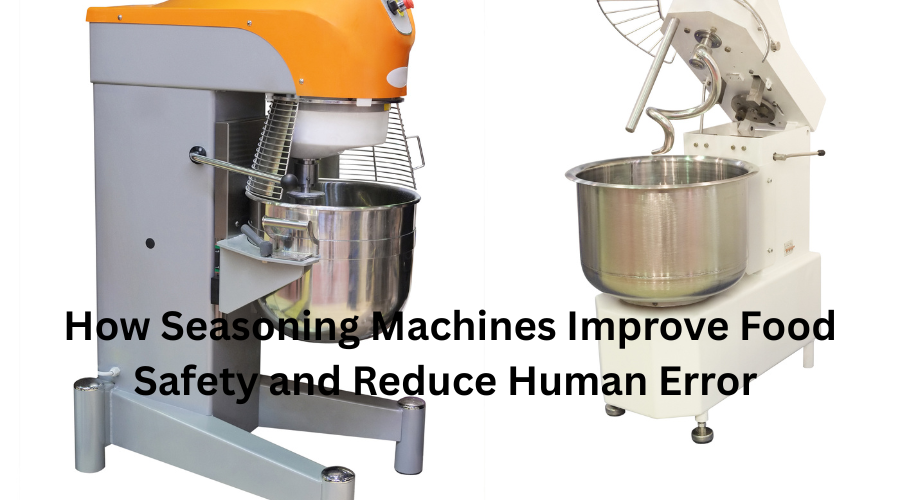
The production of food involves an uncountable number of steps, during which errors may occur. One of the most important stages is food product seasoning, and consistency, accuracy, and cleanliness are essential. The addition of flavors in chips, nuts, snacks, and other food products has been changed by seasoning machines.
These automated systems make food safer and eliminate numerous human errors in manual food seasoning. These advantages explain why seasoning machines have become heavily dependent on food companies.
Manual seasoning involves workers sprinkling or spraying seasoning onto food products. Even the skilled workforce cannot maintain the ideal level of consistency. Specific works are over-seasoned, and others are under-seasoned. The result of this inconsistency is in taste and quality issues.
Seasoning machines spread flavors in all products equally. The equipment applies specific technology, such as rotating drums, conveyor belts, or spray nozzles, that evenly apply seasonings. All snack pieces, chips, and nuts are flavored equally with the same quantity of flavoring.
The issue of human error in quantifying seasonings has several problems. The workers may contaminate it with excess or insufficient seasoning. Errors arise from misreading, lack of concentration, or simply from estimating. Such inaccuracies are costly and result in inconsistent products.
Seasoning machines have automated dispensing of precise quantities. Digital controls are used to give the specific amounts of seasoning in each batch. The machine provides the specific measure provided in the recipe. This precision eliminates estimates and inaccuracy.
Preventing contamination is important to food safety. Human handling also creates numerous contamination hazards, which machines have reduced to a considerable extent.
Whenever human beings handle food products, the chances of contamination are high. Even when using hands, bacteria may be retained. Shedding, like clothing, hair, and skin, releases particles that would contaminate food. The more products are dealt with, the higher the risk of contamination is.
The seasoning machines reduce human contact with food. Items are transported through automated processes with minimal or no worker handling. This decreased physical contact by a considerable margin. The food goes from cooking to seasoning and packaging without much human intervention.
Washing and sterilizing equipment is less challenging and more dependable in comparison with human obedience to hygiene standards. They require workers to wash their hands correctly, wear clean uniforms, and adhere to standard hygiene rules perfectly. Training does not ensure good compliance, and errors occur even with training.
Machines of seasoning can be systematically cleansed and sterilized. Food-grade stainless steel surfaces are wiped clean and prevent bacterial proliferation. Automated cleaning systems are capable of cleaning equipment well between production runs. This is a secure way of keeping food safe, as compared to a total reliance on human hygienic measures.
Peanut, dairy, or other allergen-containing products should not be contaminated with allergen-free products. Real-time seasoning exposes products to the risk of allergen contamination from hands, instruments, or surfaces.
Seasoning machines may be assigned to individual groups of allergens or washed thoroughly between batches. The automated systems include closed-seasoning chambers to prevent seasoning particles from settling onto other products. The seasoned environment reduces the risk of cross-contamination.
Certain seasonings must be applied at specific temperatures and times to ensure food safety. Seasoning in oil may require heating to the appropriate temperature. Some products need seasoning during specific cooling periods. Human workers may inconsistently observe these requirements.
Seasoning machines have accurate temperature standards. Heated systems store seasonings at the precise temperature required to make them usable and food-compatible. Sensors are temperature sensors that measure temperature and automatically adjust. Such a control is systematic and eliminates dangerous temperature fluctuations.
Food safety regulations mandate the capturing of details on ingredients, quantities, and procedures. Paper-based data storage relies on workers' ability to record data correctly. Not all records may be complete, illegible, or even lost during the busy shifts.
All the application data is automatically recorded on seasoning machines. Types of seasoning, quantities, application times, and batch numbers are recorded in digital systems. The entire record of this automatic documentation is precise, without relying on human memory or attention.
Food products are made according to a set recipe and are seasoned in certain proportions. In manual seasoning, workers have to memorize or look at recipes, measure ingredients, and combine them in the proper proportions. These measures provide chances of error. Mixed-up ingredients, wrong proportions, or even mixing errors will yield unsafe or off-specification products.
Recipes are stored digitally on seasoning machines. The operators choose the product under manufacture, and the machine automatically applies the correct formula. The system is used to measure and blend seasonings according to programmed requirements, without requiring workers to memorize complicated recipes.
Facilities for food production should meet high hygiene standards. Employees should replace gloves frequently, disinfect equipment, and prevent touching clean surfaces. Although employees have been well-trained, they have been observed to skip steps or protocols during long shifts.
The hygienically designed systems use seasoning machines. Recessed rooms ensure the surrounding environment stays off. Clean-in-place systems clean equipment without disinfecting it. The standards are always upheld in these hygienic designs built without necessarily relying on human care.
Improving workplace safety through seasoning machines, although not directly related to food safety, can be used to achieve food safety objectives. Manual seasoning involves repetitive, traumatizing tasks. It is beneficial to injured workers because the investment in seasoning automation can reduce the number of safety incidents, decrease recalls, and increase customer trust in the quality and product security.
Repetitive strain injuries are also minimized through automated seasoning. The machines are monitored rather than workers engaging in physically rigorous seasonal work. Employees who are healthier and less fatigued commit fewer mistakes and adhere more closely to food safety practices.
Seasoning machines enhance food safety to a great extent and minimize common errors in manual processes. Seasoning automation investment would yield fewer safety incidents, fewer recalls, and greater customer trust in product quality and safety.
Q1: Do seasoning machines work with various seasonings such as powders, liquids, and oils?
Yes, modern seasoning machines are designed for interchangeable use, featuring spray nozzles for liquids and oils, powder dispensers for dry seasonings, and tumbling drums for various seasoning types and consistencies.
Q2: What is the mechanism of seasoning machines to avoid the cross-contamination of product batches with allergens?
Seasoning machines prevent cross-contamination with close-up application chambers, automated cleaning-in-place, dedicated allergen equipment, and programmable changeover signals confirming sanitation before allergen-free processing.
Q3: Do seasoning machines prove hard to wash and disinfect as opposed to manual seasoning equipment?
Seasoning machines are easier to clean because they use food-grade stainless steel, have automatic cleaning, require fewer manual tools to sanitize, and maintain high cleanliness with their clean-up processes.
Q4: What are the ways through which seasoning machines can make sure that the nutritional labeling in food packages is precise?
Seasoning machines accurately count and record all seasoning ingredients added to each batch, ensuring label accuracy and providing data for manufacturers to verify nutritional information.
The invention of nut-shelling machines has t
READ FULLIndustries rely on seasoning machines a lot, b
READ FULLFood production has been advancing rapidly, with new technologies making each production process
READ FULL